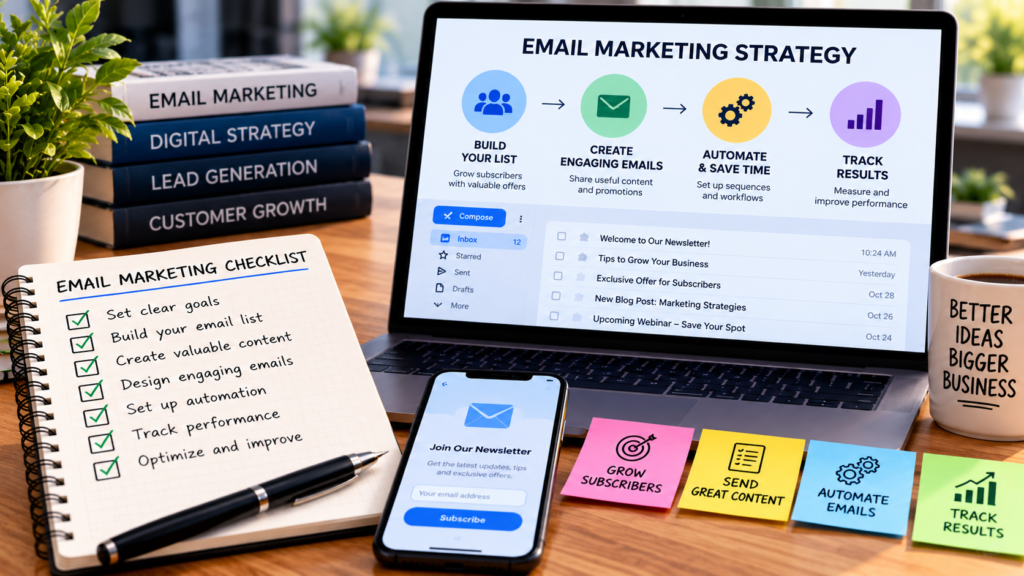
Email marketing remains one of the most practical ways for small businesses to stay connected with customers, generate repeat business, and increase sales.
Unlike social media platforms, where businesses depend on changing algorithms to reach their audiences, email gives you a direct communication channel with people who have chosen to hear from you.
The good news is that you don’t need a huge budget or a large marketing team to get started. With the right strategy, even a small business can build an email list and turn subscribers into customers.
Here are the essential steps to creating an effective email marketing strategy.
- Start With a Clear Marketing Goal
Before sending emails, decide what you want your campaigns to accomplish.
Are you trying to generate more sales, promote a new service, bring previous customers back, or build stronger relationships with your audience?
Your goal should influence the type of emails you send and how frequently you communicate.
For example, a local service business might use email to promote seasonal offers, while an online retailer might focus on new products, special promotions, and abandoned shopping carts.
Avoid sending emails simply because you feel you need to. Every campaign should have a purpose.
- Build an Email List the Right Way
Your email list is one of your most valuable marketing assets.
Start by collecting email addresses from people who genuinely want to receive updates from your business.
You can encourage signups through:
A subscription form on your website
A discount or special offer for new subscribers
A free guide or downloadable resource
A newsletter signup during checkout
An invitation to subscribe through your social media accounts
Make the signup process simple. Asking for too much information can discourage people from completing the form.
Always obtain appropriate permission before sending marketing emails and provide a clear way for subscribers to unsubscribe.
Avoid purchasing email lists. These contacts may not have agreed to receive your messages, which can hurt deliverability and damage your reputation.
- Choose an Email Marketing Platform
You don’t need to manage your email campaigns manually.
Email marketing platforms make it easier to collect subscribers, create campaigns, organize contacts, and track performance.
Look for a platform that offers:
Easy-to-use email templates
Subscriber management
Signup forms
Automated email sequences
Campaign performance reports
Unsubscribe and compliance tools
Choose a service that fits your current needs and budget. You can always upgrade as your list grows.
The best platform is one you’ll actually use consistently.
- Create Emails People Want to Read
One of the biggest mistakes small businesses make is treating every email like a sales advertisement.
Subscribers are more likely to stay engaged when your messages provide useful information.
Depending on your business, consider sending:
Helpful tips related to your industry
Product or service updates
Exclusive subscriber offers
Answers to common customer questions
Company news and announcements
Seasonal recommendations
For example, a digital marketing company could send practical advice about improving website conversions, local SEO, or online advertising.
The objective is to give subscribers a reason to open your emails even when you’re not promoting something.
- Write Strong Subject Lines
Your subject line is often the first thing subscribers see.
A confusing or overly promotional subject line can cause people to ignore your message.
Keep subject lines clear, relevant, and specific.
Instead of writing:
“Big News From Our Company!”
Try something more useful:
“Five Ways to Get More Customers From Your Website”
Avoid misleading subject lines or exaggerated claims. Your email should deliver on whatever the subject line promises.
You can also test different subject lines to see which ones generate stronger engagement.
- Establish a Consistent Sending Schedule
Consistency helps subscribers understand what to expect from your business.
You don’t necessarily need to email your list every day. For many small businesses, sending one or two useful emails per month is a reasonable starting point.
Some businesses may benefit from weekly updates, while others may only need to send occasional announcements.
Pay attention to subscriber engagement and unsubscribe rates as you determine the right frequency.
It’s better to send one valuable email consistently than several rushed messages that provide little benefit.
- Use Automation to Save Time
Email automation allows you to send messages automatically when subscribers take certain actions.
For example, you could create an automated welcome sequence for new subscribers.
A simple sequence might include:
Welcome email: Introduce your business and explain what subscribers can expect.
Value email: Share helpful information or a useful resource.
Introduction email: Explain your products or services and how they help customers.
Follow-up email: Invite subscribers to take the next step.
Automation helps maintain communication without requiring you to manually send every message.
It also allows small businesses to create a more organized customer experience.
- Track Your Email Marketing Performance
Sending emails is only part of the process. You also need to understand whether your campaigns are working.
Important measurements include:
Open rate: The percentage of delivered emails that are opened, although privacy features can make this measurement less reliable.
Click-through rate: The percentage of delivered emails that generate clicks on links inside the message.
Conversion rate: The percentage of recipients who complete a desired action, such as making a purchase or requesting a consultation.
Unsubscribe rate: The percentage of recipients who opt out of future emails.
Pay particular attention to clicks, conversions, and actual business results. A large number of opens doesn’t necessarily mean a campaign is generating customers.
Use the results to improve your subject lines, content, offers, and sending schedule.
- Make Every Email Mobile-Friendly
Many people read their emails on smartphones.
If your messages are difficult to read on a small screen, subscribers may close them without taking action.
Use simple formatting, readable text, and clear calls to action.
Avoid overwhelming readers with large blocks of text or too many competing links.
Before sending a campaign, preview it on mobile and desktop devices to make sure everything looks professional.
- Focus on Building Long-Term Relationships
Email marketing shouldn’t be viewed as a one-time opportunity to make a sale.
The real value comes from developing an ongoing relationship with people who are interested in your business.
Provide useful information, communicate honestly, and avoid overwhelming subscribers with constant promotions.
When customers trust your business and find your emails helpful, they’re more likely to consider you when they need the products or services you offer.
Final Thoughts
An effective email marketing strategy doesn’t have to be complicated or expensive.
Start with a clear goal, build an interested subscriber list, provide useful content, and communicate consistently. As your audience grows, use automation and performance data to improve your campaigns.
For small businesses looking to generate more leads and repeat customers, email marketing can become an important part of a larger digital marketing strategy.
At IdeaFlicker, we believe successful marketing starts with connecting with the right audience and giving people a reason to stay engaged with your business.